
Senior Centers / Day Care Centers / Adult Care Center
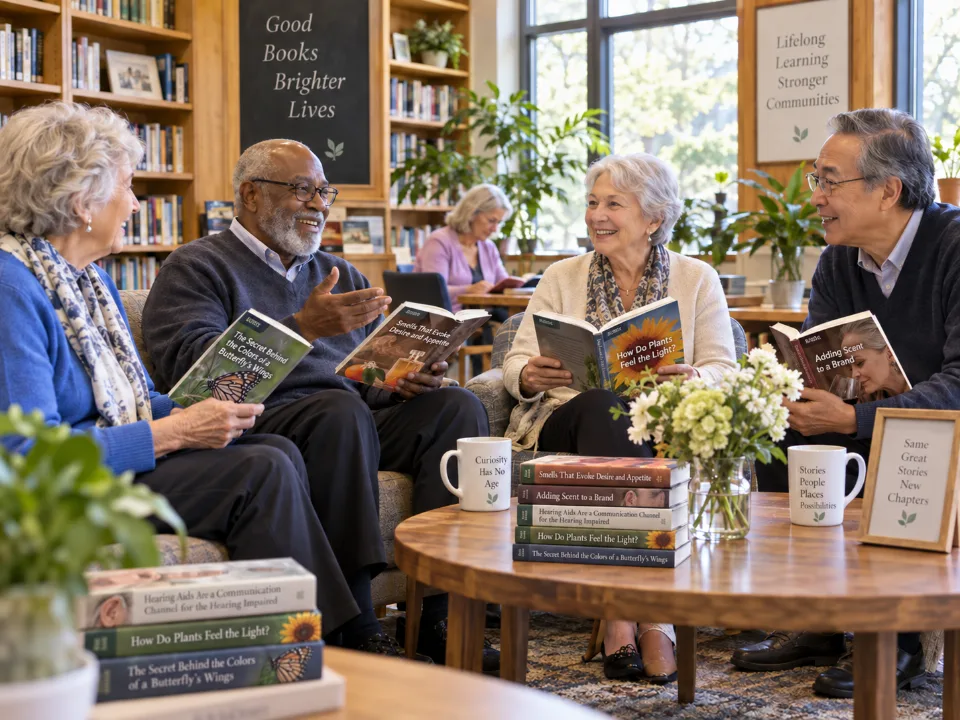
Senior Centers: Books and Knowledge for Later Life
Access to books should not have an age limit.
People continue to ask questions, discover new subjects, revisit old interests, and seek meaningful connections throughout life.
That is why Senior Centers are one of our seven planned social contribution directions.
Our goal is to help create environments where books, ideas, and knowledge remain accessible during later stages of life.
Why Senior Centers Matter
Senior centers are important community spaces.
They bring people together for activities, conversation, services, and social connection.
They can also become places for continued intellectual engagement.
Later life may create more time for subjects that were difficult to explore during earlier stages filled with work and family responsibilities.
Books can offer access to history, science, mathematics, culture, technology, society, nature, and many other areas that remain meaningful regardless of age.
Intellectual Activity Continues Throughout Life
A common mistake is to think of education as something that belongs mainly to childhood and young adulthood.
Human interest does not end with graduation or retirement.
People continue to think, compare, remember, question, and discover.
A senior may want to understand a new technology.
Another may return to a subject first encountered decades earlier.
Someone else may become interested in nature, mathematics, history, health, or culture for the first time.
Books make those possibilities available.
Books Can Support Social Connection
Reading does not have to be solitary.
A shared book can create conversation.
A reading group can bring people together around a common subject.
One person's experience can add another dimension to what is written on the page.
Senior communities contain decades of accumulated knowledge and experience. Books can become catalysts that help those experiences move between people.
In this sense, a reading space can support both intellectual and social connection.
Creating Welcoming Spaces for Reading
Physical accessibility matters.
A reading space for seniors should be comfortable, visible, and easy to use.
Clear organization, suitable seating, appropriate lighting, and accessible book placement can make a significant difference in whether a collection becomes part of everyday life.
The objective is not simply to donate books.
It is to create conditions in which those books can actually be opened, shared, and revisited.
Connecting Generations Through Knowledge
Senior centers also create opportunities for intergenerational connection.
Older adults carry experiences that younger generations do not yet have.
Books can provide common subjects around which those experiences are shared.
A story about history may lead to personal memories.
A book about science or technology may create a conversation about how the world has changed.
A mathematics or nature book may give grandparents and grandchildren something new to explore together.
Knowledge can therefore move in both directions.
Books bring new ideas into the center, while seniors bring lived experience to those ideas.
Senior Centers Within the Seven Directions
Within our seven social contribution directions, Senior Centers represent later life.
Postpartum care centers stand near the beginning of family life.
Daycare centers represent early childhood.
Schools and colleges support the years when formal knowledge expands.
Military bases represent another important transition.
Senior centers help complete the life-stage structure.
The principle remains the same from beginning to later life:
People should continue to have opportunities to encounter books and knowledge.
Later life is not outside that principle.
It is an essential part of it.