

IT-Based Math Books
Touch What You Want to Know
Connect. Explore. Experience.
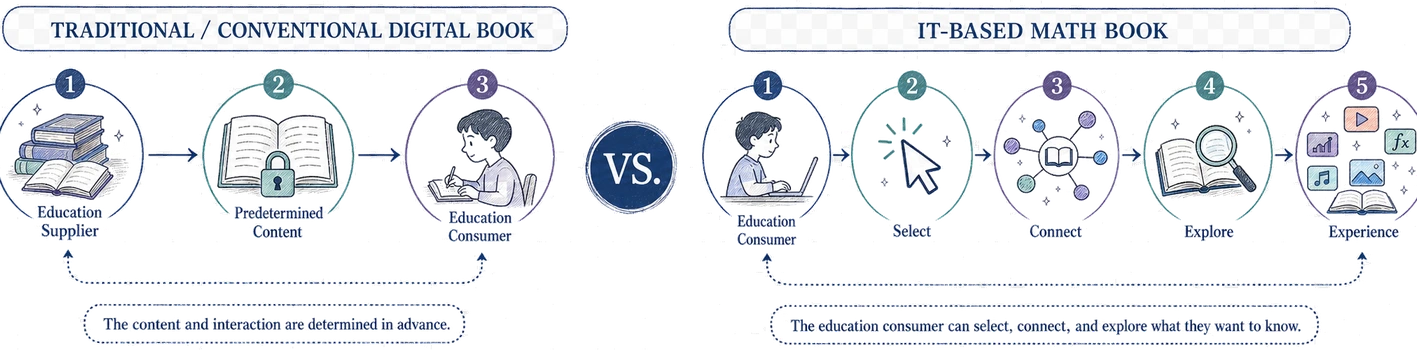
An IT-Based Math Book uses information technology to connect words, images, concepts, and ideas to a world of related knowledge and experiences.
From Static to Interactive
The essential change is not simply from paper to digital. It is from static content to interactive educational content.
The screen alone does not change education. Interactive education begins when the education consumer can act within the content.

Mathematics in Natural Language
Natural-language mathematics explains ideas through nature, science, technology, humanity, and society.
Words, sentences, concepts, and relationships become points of interaction.
A word, a sentence, or a concept can connect to another form of information—image, video, sound, animation, explanation, and more.
From Reading to Seeing, Hearing, and Experiencing
The same knowledge can be encountered through different forms of experience.
Read explanations in text, watch movements in video, hear sounds and rhythms, see relationships in graphs, and explore through animation.
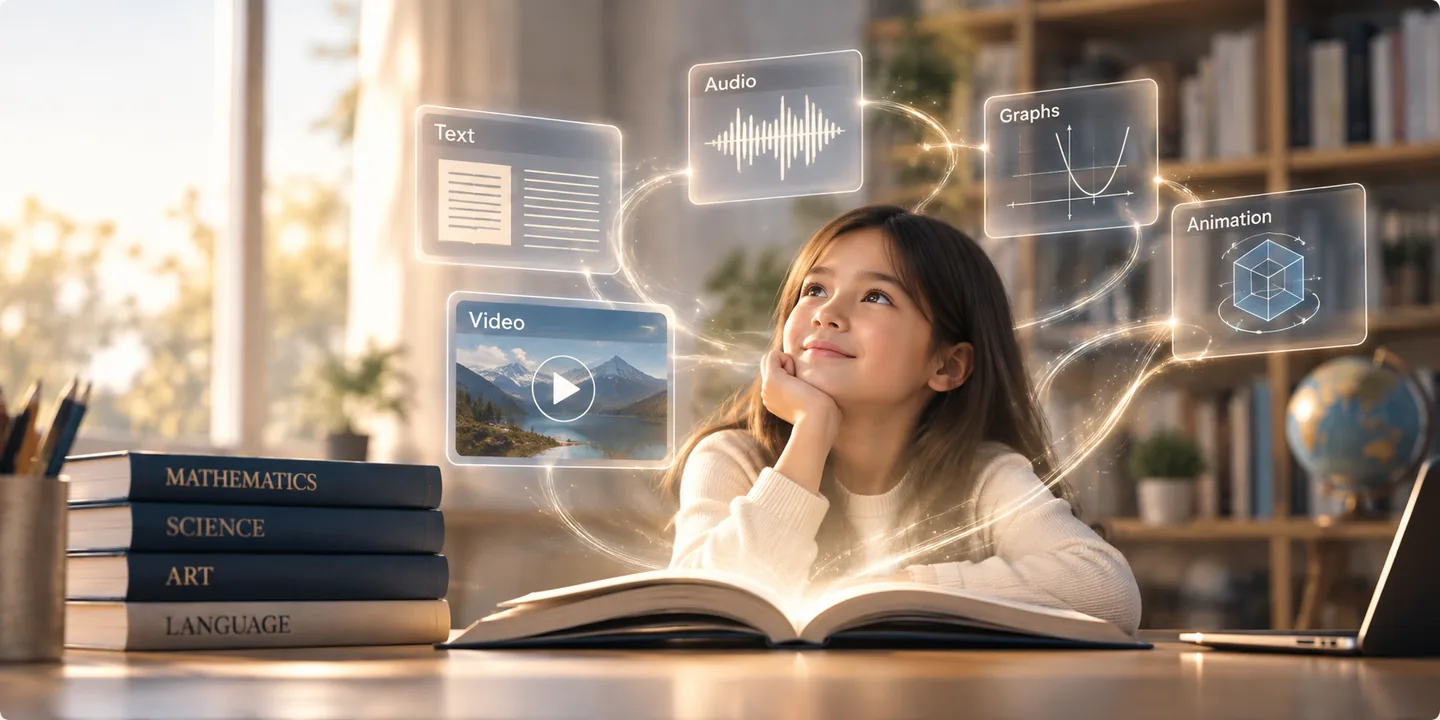
- Read explanations in text
- Watch movements in video
- Hear sounds and rhythms
- See relationships in graphs
- Explore through animation
- Experience interactively
Mathematics Connected to the Real World
Mathematical ideas connect to nature, science, technology, humanity, and society.
Mathematical ideas can be encountered in nature, science, technology, humanity, society, architecture, and everyday life. Information technology makes these connections directly accessible within the educational experience.
Interactive & Experiential Mathematics Education
IT changes the role of educational content—from something delivered to something you can interact with.
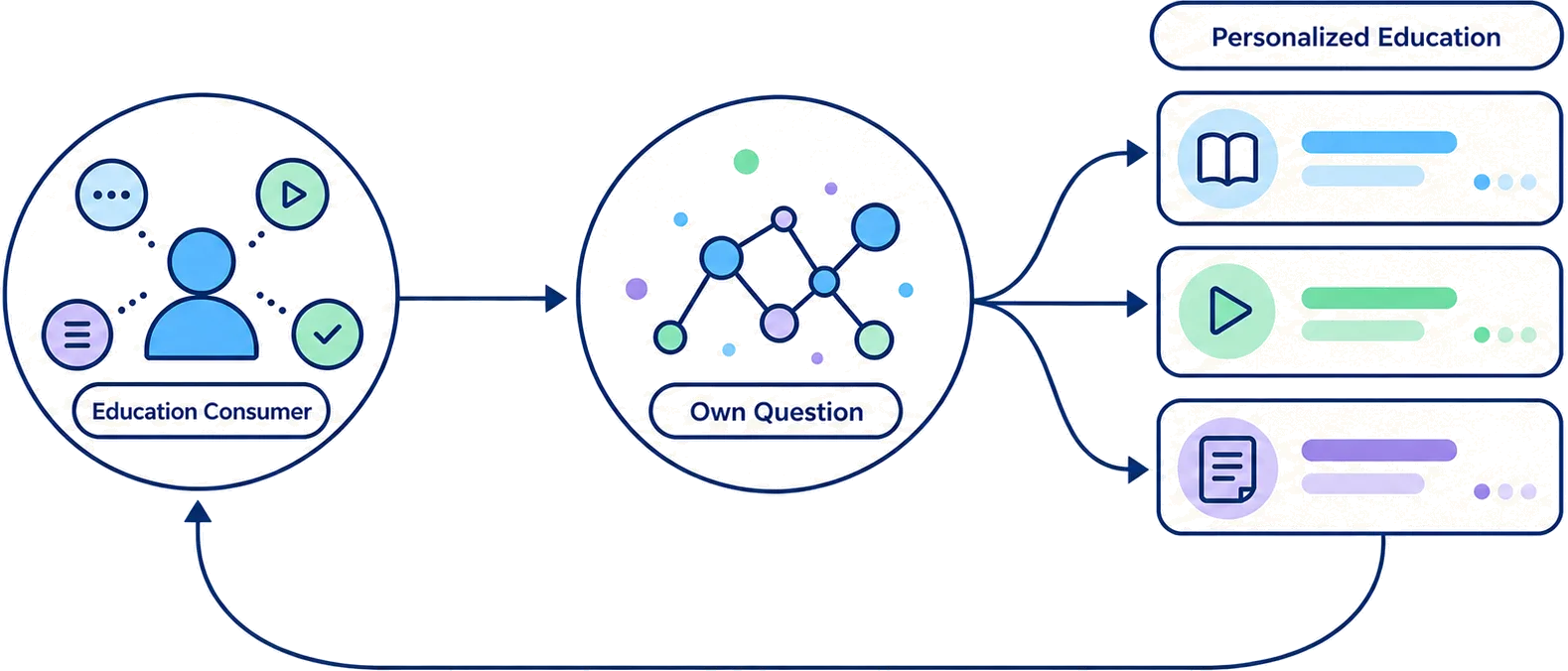
Every selection is different. Every interaction is different. Every education consumer can move educational content differently.
What Can Education Do With Those Interactions?
Interactions create data—different choices, different paths, different experiences.
The Next Challenge
Every selection is different. Every interaction is different. Every education consumer can move through educational content differently. Those interactions create data. The next question is: What can education do with that data? That question leads to the next stage: DT-Based Math Book.
Explore DT-Based Math BooksNext stageExplore DT-Based Math Books